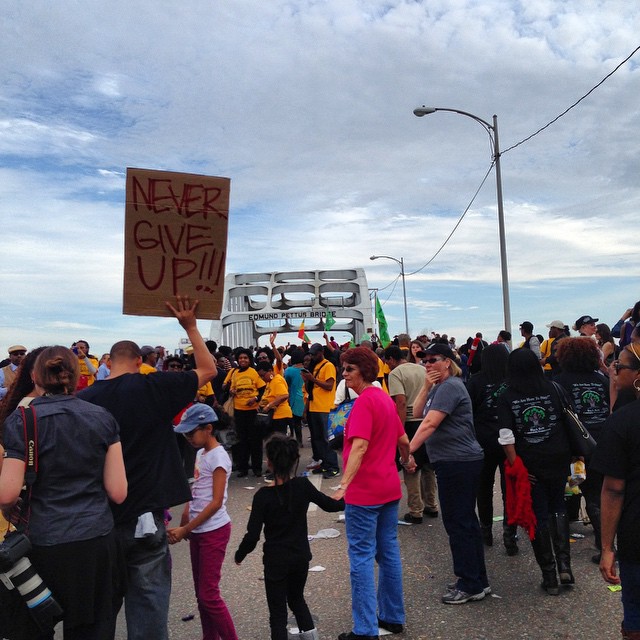
At Facing History, our approach and scope and sequence is rooted in how people see themselves and in society (individual and society), and in group membership (we and they). In our curriculum we start with identity and ask questions that guide educators and students to think about how they belong in the world, in a group, out of a group. What makes me me? What is normal? How do we become who we want to be or belong? These questions are complex just like identity is, and they evolve over time. How I saw myself at age 13 versus 23, and 33 are all different. Who I will become can still change, and where I want to be might be different 5-10 years from now. How my identities intersect (Black-male-queer) also play a big role in the way those questions can be answered. The way others see me or not see me can impact the way I show up in public/social spaces, at work, with friends/family, in all White spaces, in all Black or gay spaces, in wealthy spaces, and in communities who might not be accepting. Everyone is on a different journey with their identity, and in Germany I was fortunate to learn from others on where they are in their journey.
At the Gym: During my short time in Cologne and Stuttgart, I was able to have some in depth conversations with locals about their experiences with belonging in Germany. All of my conversations happened unsolicited and without me approaching or initiating anything. Near our hotel was a fitness center on a busy pedestrian street that I visited twice. I rarely go to the gym when I’m out of town for work or vacation, but it was so close and free I couldn’t resist. When I checked in there was a young man that glanced at me, and smiled. It was like he knew that I was a foreigner, because he immediately started speaking english. It was 6:48 a.m so I wasn’t expecting any small talk, let alone an in depth conversation about belonging. He asked where I was from, and how I liked Cologne. When I asked him the same question, he paused. It was like I triggered something in him. He shared that he is learning to like Cologne, and that although the city presents itself as “fun and welcoming,” it is far from that for people who are not native to Germany. He identified as biracial (Spanish-German), and found community in the city, but admitted it took a long time. Javier wasn’t considered a migrant or labeled that way by the government, but felt he was treated that way. Without any family connection moving to Germany was not easy, but he told me the Americans who moved there had a better experience. I appreciate him for trusting me so easily as a stranger, and having the courage share his experience. His story wasn’t the worse I heard from the locals, but has a common theme, a lack of acceptance. Although Cologne is very progressive as the 4th largest city in Germany and know to be “Queer City,” Germany has a long history of “we and they,” that hasn’t changed despite where they might be in 2023.
Store Clerk: The very last night in Cologne, I had a craving for some Oreos and Pringles (don’t ask why). Me and a friend I met from the program went across the street from the hotel to a local convenient/corner store. When we first entered the store, we were the only ones there. The clerk saw us looking around and was very nice when we asked for help. Then when it was time to check out, we made small talk and then other had entered the store. It was clear he felt very comfortable with us, and made a few comments about his experience at the store. Those comments led to a deeper conversation about how refugees are treated in the country by other locals. It’s not often that he has the opportunity to talk in english with customers, so he really opened up in the short time we had. As others approached the counter behind us, the clerk shook his head, looked around the store, and gave a sigh. “They have no ideas…they have no idea,” he said. “Living here and working here is not easy. I had to learn everything, and even after learning German they still don’t accept me.” We asked him later where he was from and learned he was a Ukrainian refugee, was about 55-60 years old, and just moved to Germany in the past year. He worked in different stores and had a hard time finding consistent work, due to his legal status, background or identity. In addition to learning a new language and culture, he shared that adjusting to life there was tough. Before we left we thanked him and tried to encourage him, but felt really bad. As we walked back, we wondered how many other people had similar experiences in Cologne or other German cities. This interaction had an impact on me in thinking about inclusion and belonging in another country. Also at this point I was half way through the program, and about to visit Stuttgart where I would learn more in my interactions with residents about their experiences.
Blackness in Stuttgart: For the second half of the trip I had more interactions with Afro-Germans, even though I saw fewer in Stuttgart than I did in Cologne. The biggest difference in the two cities was class. Stuttgart was more upscale and appeared more wealthy, and it was apparent if you were a “have-not.” My first interaction with a local happened on a afternoon coffee run to Dunkin. While I was trying to figure out what to order, the young man asked me in english where I was visiting from and if I liked Stuttgart. He told me he was originally born in New York and was technically Afro-Latino, but ended up in Germany because of his dad who serves in the military. He is a senior in high school and planned to attend college in Germany. I asked him how he identifies in Germany, and if he likes it better than New York. Since he spent most of his childhood in Germany he now identifies as German. He made it clear that being mixed race has not been a issue, and feels his identity and Blackness is more accepted than in the U.S. We talked about the issue of colorism, and he feels more accepted because he can speak good english, is lighter skinned, and has American roots. Germans still give him stares sometimes, but it is not the “you don’t belong here” stare that he might get in a upper-class White area in the U.S. After making my cold brew and talking for a few minutes I wished him well on his journey in college and plans to have a career in cybersecurity.
The second day in Stuttgart we ran into some young ladies on the subway from Ghana. I observed and listened mostly as my friends from the group talked and asked questions about their experiences. The conversation started because we loved their shirts and how they were representing the culture. For me it was a moment of Pan-Africanism to see the love and solidarity between Black Americans and Afro-Germans. I heard the ladies describe their experiences living in Germany, and how they were treated in each of the cities they visited. None of us were surprised by what they told us, but they mentioned instances where the service or way they were treated was different. They also mentioned the stares in certain places that were more White, or the lack of support when trying to address injustice. Berlin was recommended as the place to be for more Black representation in Germany from the diaspora. Meeting and listening to both the guy at Dunkin, and the ladies from the subway was the highlight from the locals in Stuttgart. It was so affirming to know there were other Black people in Germany that can relate, and had similar experiences to me and others in the U.S.
On the last day of the trip as we were walking to get lunch (me and one of my friends from the group), we saw a tall young Black male being surrounded by six White police officers at a subway stop. We waited a few minutes because we were so scared for him. He glanced at us (the only other Black people close to him) and looked the other way. The officers weren’t aggressive or causing any harm (that we know of). I think the trauma of what we experience in the U.S hit us, and we were hoping it did not escalate. There were so many questions we had. The guy was chill and not confrontational or threatening. Did they need six officers to detain one person? Why were they stopping him? What were his rights and how long were they going to detain him there? How are the bystanders and mostly White Germans seeing this Black male? Do they see him as a outsider, a criminal, a threat? What is the outcome? Will he be arrested? If he is a migrant or has a unclear legal status will he be deported? Although there were a lot of missing answers, witnessing that situation was a reminder that German society treats it’s people differently. It was a culmination and confirmation of everything the people we met told us about their experiences living in Germany. I left Germany wondering, what does it mean to be German? What does it take to belong, be accepted, and seen as German? When I came back to the U.S there were people asking how I was treated in Germany compared to the U.S. Although it was a better experience, belonging is never guaranteed. For those looking to belong, you can follow all the rules, do everything a group, organization, or country tells you to do, and yet still there is no guarantee that you will belong.






 The Paradox