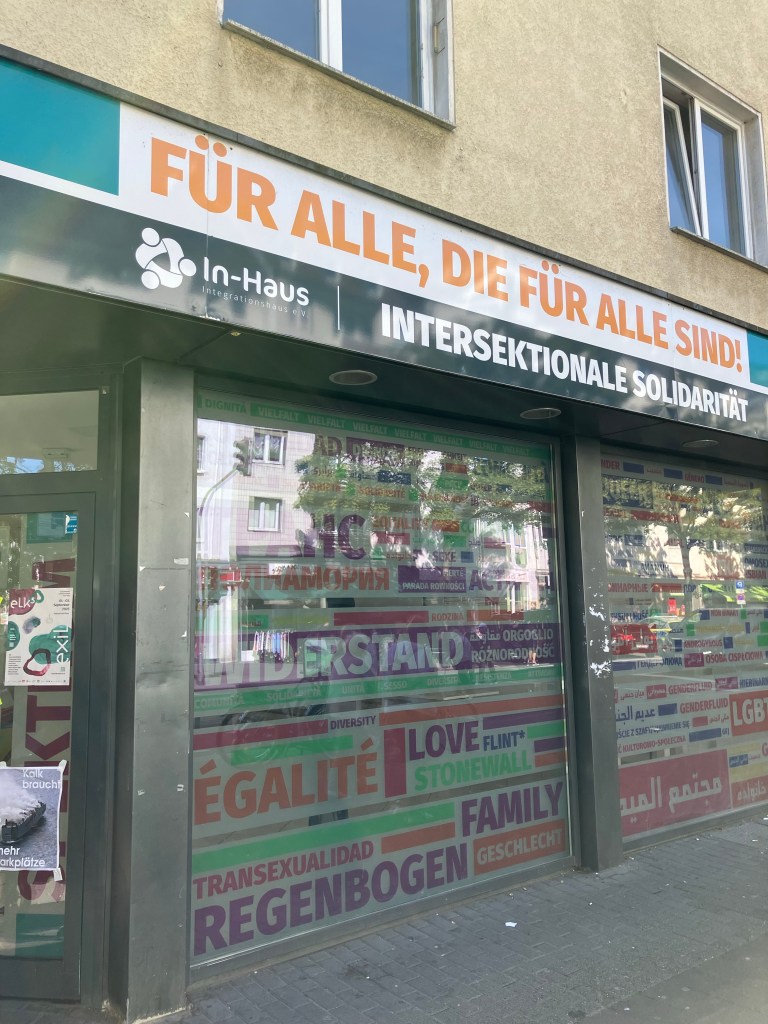
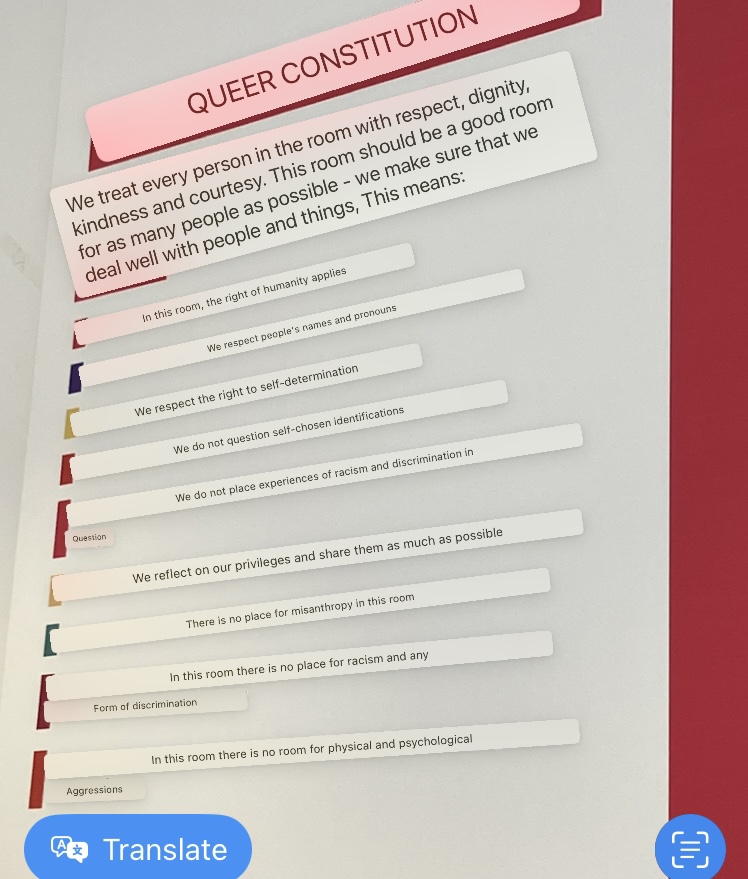
Integration House is a non-profit that provides a welcoming space for migrants to integrate into German society. They have four main goals: information, community, empowerment, and solidarity.
Information: Migrants have access to information about government services in over 7 languages. Staff at Integration House are also migrants and can speak 35 languages. Migrants can also take classes to learn German. The office is open 12 hours a day and also supports queer migrants of color.
Community: Another big part of their mission is helping migrants find community and connections. In the community space you can reserve a room to host meetings. The services provided to migrants are all free.
Empowerment: Integration house partners with media/content creators to make videos that will counter the false narratives about migrants. Another goal of the videos is to show the true contributions of the community and positive impact. They also offer space to artists ranging from poets to podcasters.
Solidarity: There are workshops that help migrants with adjusting to city life in Cologne. Some topics for workshops also include how to create welcoming spaces and collaborate with other groups of people.
University of Cologne Department of Gender and Diversity: With a staff of 10 people, this department is breaking barriers for students of color, 1st generation college students, and refugee scholars across Germany. U of C is the largest university in Germany, and has made a big impact in DEIA (diversity, equity, inclusion, accessibility) work. Their Gender and Diversity Management department is responsible for groundbreaking initiatives including their Equal Opportunities Strategy which addresses inclusion, educational equity, and anti-discrimination. They are the only university in Germany that is implementing a DEIA program of this scope.
The EU mandates all countries have a law in their higher education programs but there’s no support or specific protections at the federal level such as Title 6 in the US.
Equal Opportunities Strategy at U of C:
1. Anti-discrimination
2. Educational equity
3. Family Friendliness
4. Gender Equality
5. Inclusion (UN Convention on the Rights of Persons with disabilities
Laws prevent U of C from collecting data on race. Since race is not a category in Germany, it is difficult to track diversity.
Post colonialism Panel: The professors started by asking the group what or if we knew about Germany’s colonial past. There was a mix of responses ranging from not learning anything, to knowing Germany’s past as a colonial power, and the impact on natives. They shared one example and asked us “What was the first genocide of the 20th century?” In present day Namibia (southwest Africa), there was a genocide pre World War 1 that was covered up by Germany. The panel discussed how Germany has confronted its legacy with Namibia (former German Southwest Africa). They’ve paid back $1 billion in reparations, but did not collaborate with the community or tribes who were impacted. As the group started asking questions each of the professors discussed how Germany has confronted its colonial past. Although there was resistance for a long time, recently they noticed more openness to learning about colonial Germany and wanting to decolonize knowledge about it.
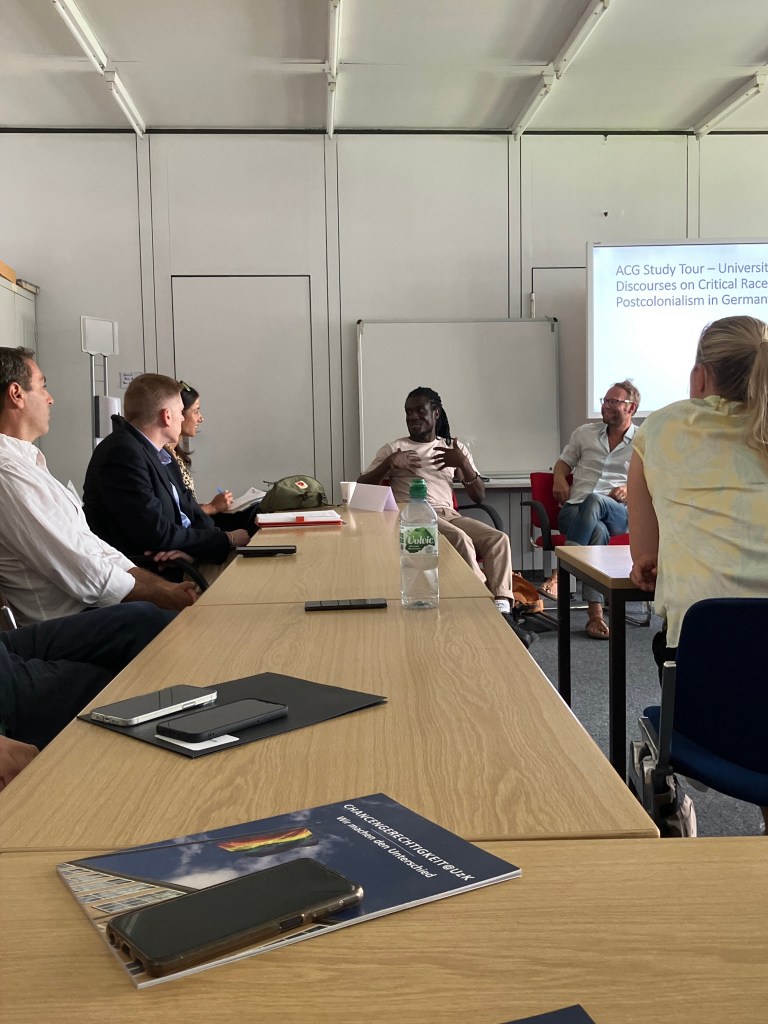
Another question asked about how Germany is decolonizing math and STEM. Professors mentioned a lack of awareness about the impact of racism and colonialism in STEM.
In more responses to questions about confronting the legacy of colonialism, the professors mentioned that race can’t be mentioned and is still taboo because of the Holocaust. When program participants asked about how German history is taught pre-colonialism, professors admitted most Europeans and Germans don’t understand or know their history.
One of the professors who was from Cameroon, shared his expertise and lived experiences. He explained in one of his responses that people make assumptions about Africans thinking they are automatically critical of the government in regards to colonialism. However people fail to understand how different identity groups intersect, and the impact of patriarchy, gender, race, and class.
Someone asked how or if the transatlantic slave trade is taught. It is not currently taught broadly in German schools the way it is in the U.S, and many don’t even know it’s part of German history. Some European countries consider it an American/U.S problem, even when countries like Sweden or the Netherlands have acknowledged their past with slavery. Germans have not fully confronted their role or how they benefited.
 The Paradox
Leave a comment