Visit with Deputy Mayor Dr. Ralph Ester and Discussion with The Department of Integration and Diversity:

Dr.Ester welcomed the group by giving us an overview of Cologne’s history and progress, while also teasing us with a list of historical and fun cultural places visitors must see. As the oldest and 4th largest city in Germany, I was impressed with the city’s investment in it’s people. While most cities in the world spend money to attract business, and place tourism or business interests before it’s citizens, Cologne has done the opposite. It’s Department of Integration and Diversity has been a national leader in making the city of Cologne an inclusive place for everyone. Their work ranges from integrating migrants into German society, LSBT programming (their LGBTQ office) including hosting the largest Pride in Europe, protecting transgender rights, and offering DEI workshops. We spent over an hour talking with the staff at the department, and asking questions related to their work in making Cologne the most welcoming place in Germany.
Visit at Rubicon:
Our visit to Rubicon gave us more insight into the work of LGBTQ non-profit work in Cologne and Germany. Their mission states that they are, “committed to the equality of different forms of life in society as a whole, for self-determination and the recognition of diverse identities.” Rubicon provides many services for various groups including seniors, families, and migrants. Some of the services they offer include health education, gender and sexual diversity trainings, anti-discrimination trainings, and mental health and anti-violence counseling. They have a staff of about 30 people serving the Cologne region. Many of the staff we talked to were trained social workers and psychologists.

Our group asked questions about how their services were impacting the most vulnerable in Cologne and throughout Germany. We discussed topics such as Transgender protections, the laws and process for transitioning, getting names and court documents changed, access to healthcare, adoption, fundraising and philanthropy for Rubicon, collaboration with other Queer NGO’s, and connections with our experiences in the U.S.
Nazi Documentation Center:
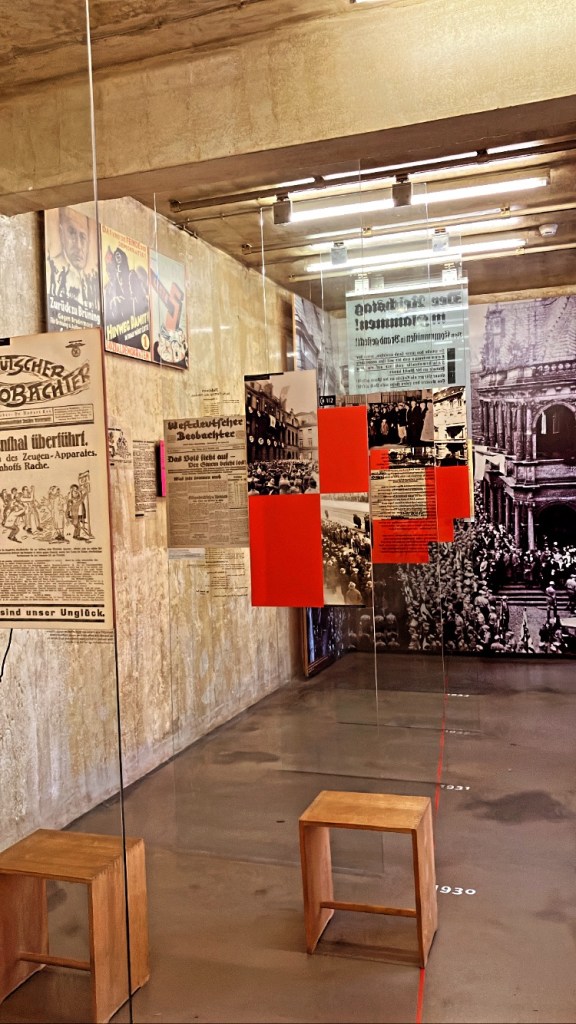
As we arrived at the center, we were split into two groups to do tours of what use to be the headquarters for the Cologne Gestapo (secret police). It was both a prison and center for torture where Jews and other groups were processed, imprisoned, or held until their final fates. This experience was very powerful and emotional. The layout of the facility is similar to how older U.S prisons were built with dozens of windowless rooms and solitary confinement cells. Seeing the names of people who were brought here, along with how they were processed and treated made my stomach turn. As both a memorial and research center, we walked through exhibition rooms that gave us a glimpse of what Nazi era Germany (1933-1945) was like locally in the Cologne region. We learned about the database of Jews during the Holocaust who lived in Cologne, and were imprisoned or murdered. Overall it was a tough experience to get through, and there were so many graphic details of what the Nazi’s did and how the space was used. I needed time and space to process or debrief everything, but we had such a tight schedule. It would also be helpful to prepare yourself emotionally and mentally before going, and to understand the history of the building as a torture facility and prison before going.


 The Paradox
Leave a comment